Masks "MEDICA" IVL, Masks "MEDICA" CPAP
Sort By:
Sort By:
Make one-click callback from our expert!

-200x200.jpeg)
-200x200.jpeg)
нер(1)-200x200.jpg)
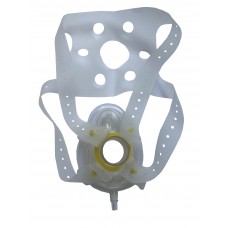
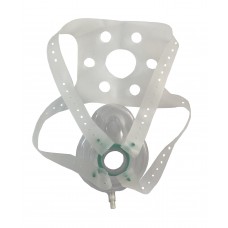
Non-invasive ventilation of the lungs involves respiratory support using such a key element of medical equipment as a face or nose mask. Through it, high-pressure air is continuously delivered to the patient from a special CPAP device. The mask tightly fitting to the face does not require intubation of the patient's trachea - the installation of a plastic endotracheal tube to open the airways.
Studies have shown that the correct use of a CPAP mask for non-invasive ventilation reduces the need for an invasive technique that leads to complications and even death. In addition, this method of ventilation for people who, due to chronic diseases, cannot fully breathe themselves, can be used for a long time.
A mask for artificial lung ventilation is used for various diseases of the human respiratory system:
The work of a respiratory mask for a ventilator is not complicated. It is connected to the pump of the device by means of special tubes that take air from the environment and after filtration deliver it to the patient. The type of product used determines the route of air injection.
A person's breathing can be facilitated in two main ways – using an oronasal (completely on the whole face) or a nasal mask.
SIPAP face masks cover both the nose and mouth. They are usually recommended in a situation where the patient is breathing with his mouth open, for example, as a result of blocking the free flow of air through the nasal openings (curved septum, polyps or nasal congestion).
Compared with nasal masks, full-face masks are less dense, because due to their large surface, the number of places of potential "exit" of air increases. Face masks are usually more expensive than nasal masks due to the amount of material used.
They are smaller than the facial version, so they may seem more comfortable and light, especially for patients prone to claustrophobia. You can choose models of nasal CPAP masks: covering the entire nose without touching the mucous membrane, or those equipped with nasal pads adapted to the size of the nostrils.
The outlet of the air hose of the nasal mask for CPAP devices can be on the face or on the top of the head. The latter solution is especially suitable for people who often turn over in their sleep, as well as those who prefer to sleep on their stomach.
In such cases, otolaryngologists, as a rule, recommend oronasal masks for the whole face.
If you are buying a mask for artificial ventilation for the first time, consult with your doctor. It should be airtight and tight-fitting. An incorrectly chosen mask can be problematic for people with irregular facial features, an artificial jaw or thick facial stubble. Also consider the material from which the mask is made. For those who are allergic to silicone, it is better to choose helium options.
Remember that the SIPAP mask is a product that we use about 8 hours a day in direct contact with the body, so it needs to be taken care of properly.
SIPAP masks are products that need to be replaced with new ones from time to time for hygienic reasons.
We offer to use the services of the online store "Medika" in Kiev to buy SIPAP masks at favorable prices from the best manufacturers. All the products available in the assortment make it easy to fit them under the head, have a breathing port, are easy to clean and disinfect. The goods are delivered to all regions of Ukraine.


-228x228.jpg)



-228x228.jpg)
-228x228.jpg)
-228x228.jpg)


